Ask three contractors for the firewater demand of the same depot and you may get three different answers. That spread is the reason insurers, auditors and fire engineers insist on a documented maximum water demand assessment. It is the single number from which storage volume, pump rating and ring-main diameters all follow — so it must be traceable, not asserted.
Define the fire scenarios first
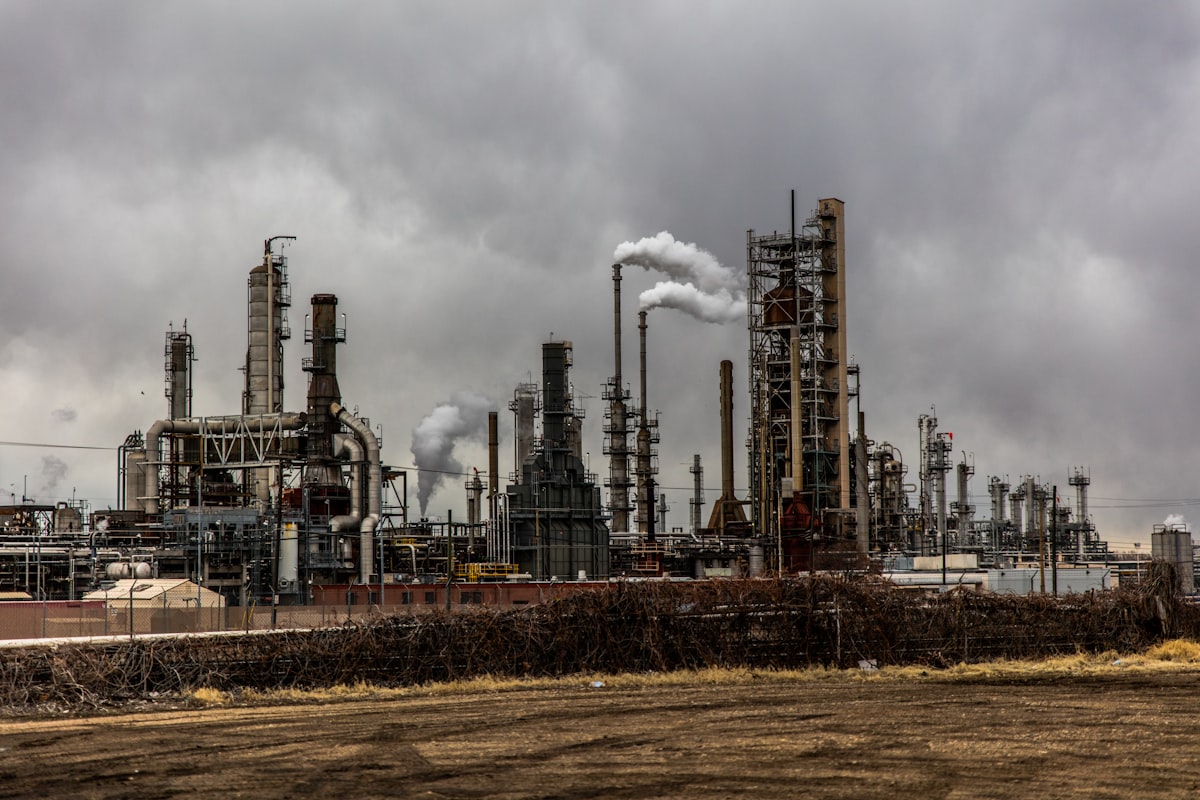
A demand assessment starts by listing credible fire scenarios for the occupancy: bund fires, tank rim exposure, loading-rack spill fires, warehouse compartments, dust or process areas. For each scenario, the applicable standard practice assigns application rates and areas of operation for sprinklers, deluge or foam, plus hydrant and monitor flows for manual firefighting. The governing scenario — the one demanding the most water — sets the design case.
Aggregate flows honestly
Total demand is the sum of simultaneously operating systems: automatic suppression for the governing scenario, plus hydrants and monitors for exposure cooling and manual attack, plus any process safety flows that cannot be isolated. Common errors include double-counting systems that cannot physically operate together (conservative but wasteful) and omitting hose-stream allowances (dangerous). Each assumption should be written down so a reviewer can follow it.
Duration sets the storage volume
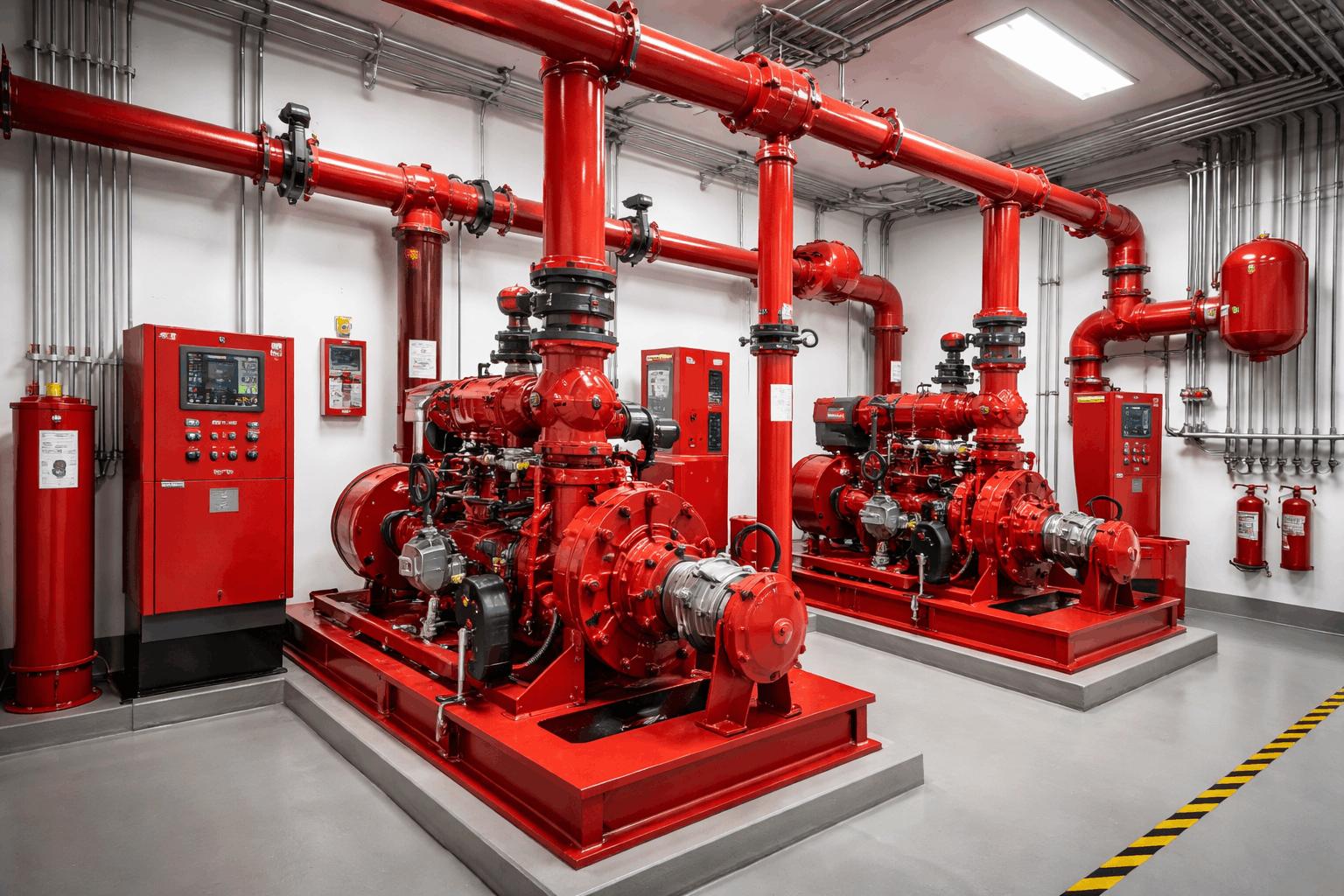
Flow rate is only half the answer. Storage volume equals flow multiplied by required duration — commonly 2 to 4 hours for high-hazard industrial occupancies — plus allowances for refill limitations and testing. In parts of Kenya where municipal refill is unreliable, we routinely recommend the upper end and segregated firewater storage that process consumption cannot draw down.
- Document every scenario, rate, area and allowance in one calculation set.
- Size tanks from duration, not from rule-of-thumb volumes.
- Revisit the assessment whenever occupancy, storage or layout changes.
From demand to network design
Once demand is fixed, the workflow continues into hydraulic modelling: ring-main sizing, pump duty verification and pressure contour checks at the remote hydrant. Demand is the input; the network proof is the output. One without the other is half an engineering job.
When to commission an assessment
New terminals, LPG facilities, warehouse developments, plant expansions, insurance audit findings and any site where "the pump seems small" are all triggers. A demand assessment typically pays for itself by preventing one oversized tank or one undersized pump. Talk to our fire team with your site layout and occupancy details.
Tagged: maximum water demand, firewater network design Kenya, firewater storage sizing
Need this engineered for your site?
Send drawings, layouts or a scope note — we respond with a scoped proposal.